KARYA Article
Building a Customer-Centric Enterprise with Dynamics 365 CRM
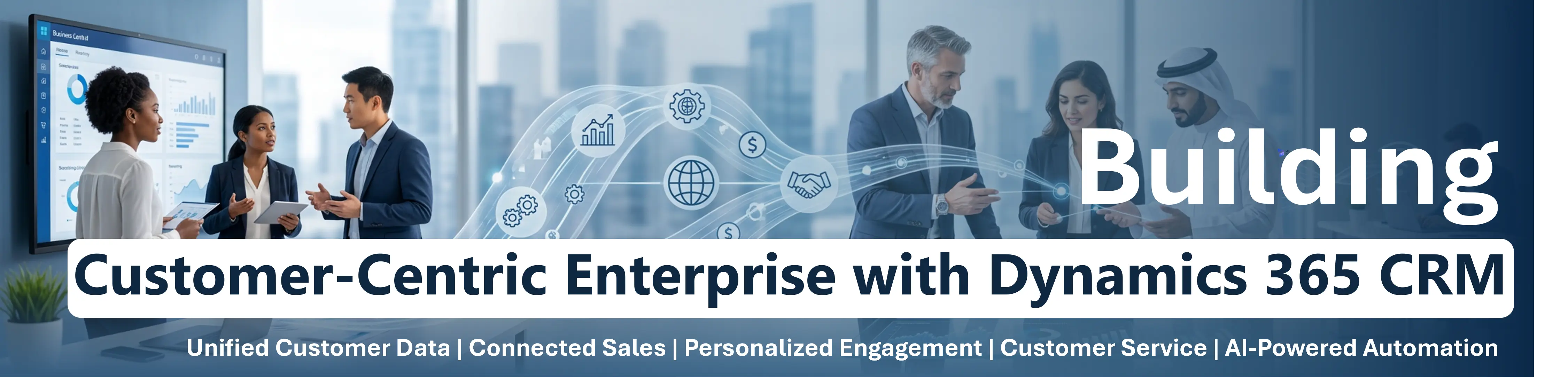
In today's enterprise landscape, operational efficiency remains a cornerstone of sustainable growth. Yet many organizations still lose 20% to 30% of their annual revenue because of fragmented, manual processes and broken workflows.
For organizations operating across multiple regions, Dynamics 365 helps connect customer information, teams and processes enabling a more integrated approach to customer engagement and to business operations.
The Challenge: Connecting Global Teams and Customer Data
Enterprises operating across regions such as the USA and India can face distinct operational challenges. Marketing, sales and delivery teams may rely on separate tools and processes, making it difficult to maintain a consistent view of the customer.
- Pre-sales details captured during international sales cycles may not reach project teams with enough context, leading to delays and scope-related issues.
- Account executives may lack visibility into active support tickets, leading to poorly timed customer conversations.
- Customers may become frustrated when they need to repeat their technical history to multiple departments.
The Solution: Connected Customer Operations
The Dynamics 365 customer engagement applications provide connected capabilities for managing customer-facing operations. By linking front-office interactions with relevant business data, the platform helps teams maintain greater visibility across the customer journey.
Rather than managing customer information across multiple systems, organizations can create a more connected environment in which sales, marketing, service, and delivery teams have access to relevant customer context.
Core Pillars of a Dynamics 365 Customer Ecosystem
A strong customer ecosystem rests on four core pillars that integrate customer data, sales, engagement, and service.
- Pillar 1: Unified Customer Data: Dynamics 365 Customer Insights brings customer information from multiple sources together to create unified customer profiles, helping teams understand customer needs, interactions and history.
- Pillar 2: Connected Sales: Dynamics 365 Sales provides sales teams with visibility into leads, opportunities, accounts and revenue enabling them to manage the pipeline and make informed decisions.
- Pillar 3: Personalized Engagement: Dynamics 365 Customer Insights – Journeys enables organizations to create targeted campaigns and personalized customer journeys using customer data, interactions, behavioral signals, and preferences.
- Pillar 4: Connected Customer Service: Dynamics 365 Customer Service helps support teams manage cases, interactions, and customer requests while preserving context across the customer relationship.
How These Pillars Work Together
- Unified Data: Customer Insights integrates transactional, behavioural and observational data to provide a more complete view of the customer.
- Global Collaboration: Dynamics 365 helps teams across regions work with shared customer information, while relevant Dynamics 365 business applications provide capabilities such as multi-currency support for organizations operating across markets.
- AI-Powered Automation: AI-powered Copilot capabilities across Dynamics 365 can assist employees with tasks such as summarizing interactions, surfacing relevant information, supporting opportunity and case management and drafting responses depending on the application and enabled capabilities.
In 2026, unified customer data also provides a foundation for Copilot and AI agents, enabling teams to surface customer insights and take action within their workflows.
Together, these capabilities help organizations connect teams, improve decision-making, and deliver a more consistent customer experience.
From Operational Gaps to Connected Operations
| Operational Gaps | Connected Operations with Dynamics 365 | |
|---|---|---|
| Scattered customer data | Unified customer visibility | |
| Manual handovers | Connected workflows | |
| Limited cross-team visibility | Shared customer information | |
| Inconsistent regional processes | More standardized and governed processes | |
| Multiple disconnected applications | Integrated business processes | |
| Delayed access to customer insights | Faster, data-driven decisions | |
Business Value for ERP Service Providers
For ERP services firms, implementing Dynamics 365 CRM internally can improve workflows while creating opportunities to deliver additional value to existing customers.
- Front-to-Back Office Integration: Integrate Dynamics 365 customer applications with ERP platforms, including SAP, Oracle or Dynamics 365 Business Central to connect customer-facing and operational processes.
- Expanded Customer Value: Combining ERP and CRM capabilities enables service providers to address a broader range of customer needs.
- Recurring Managed Services: CRM environments create ongoing opportunities for optimization, automation, integration, enhancements, and AI adoption.
At a Glance
Microsoft Dynamics 365 CRM unifies customer data, sales, marketing, service and automation to deliver a more consistent customer experience. KARYA Technologies helps organizations integrate CRM and ERP automate processes and enhance customer visibility.
Ready to build a more connected enterprise? Discover how KARYA Technologies can help you unlock greater value from Dynamics 365 CRM.
Connect with KARYA Technologies at info@karyatech.com or visit www.karyatech.com.